
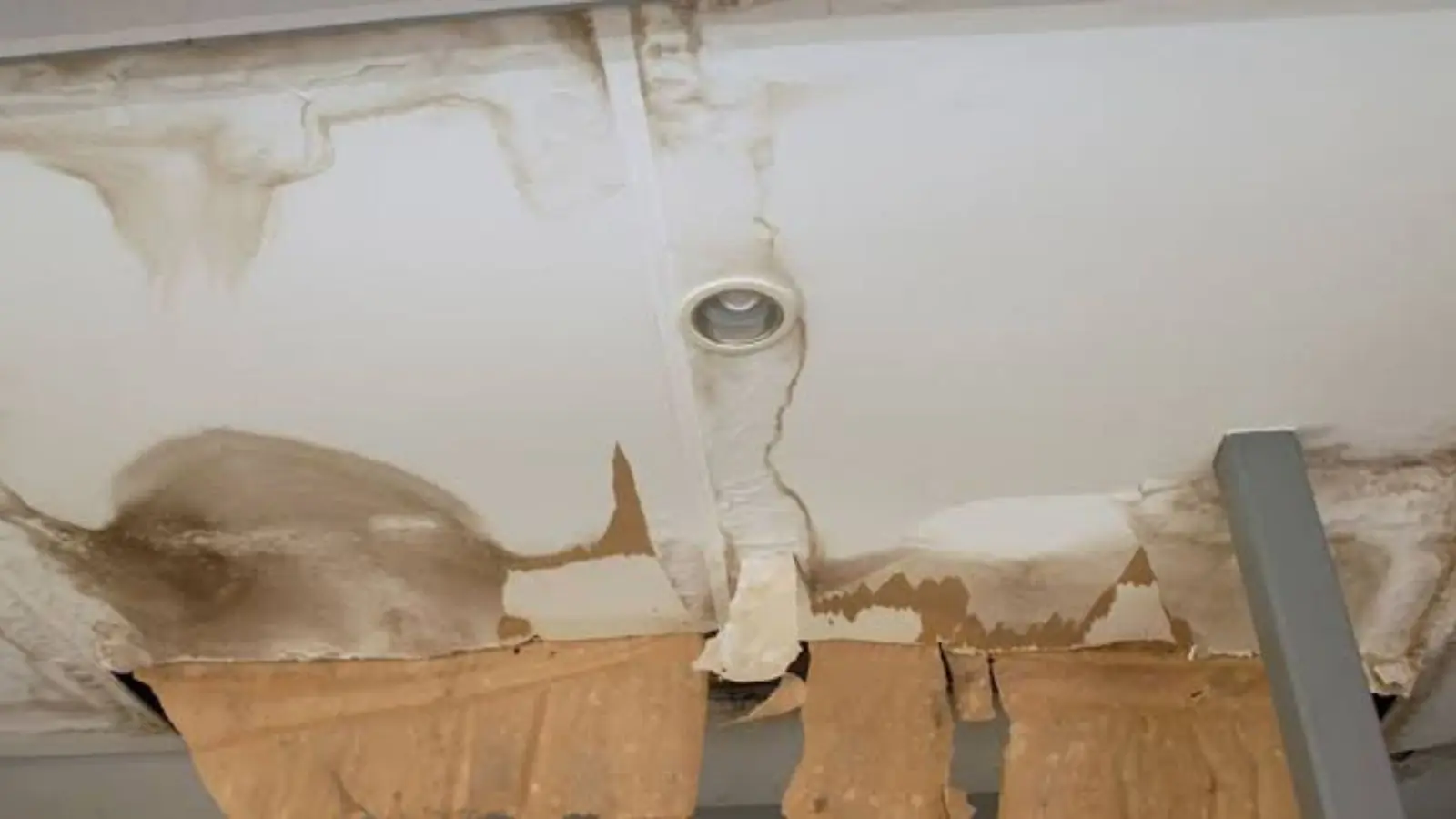
To fix a water damaged ceiling in Port Hueneme, CA, find the source first, dry the area, then repair the drywall. Painting over a stain is the most common mistake. If the water is still coming from above, the stain returns, and the drywall keeps weakening.
Safety comes before repair. A ceiling that has taken on water can hold many pounds of liquid. If it is sagging or bulging, keep people out of the room, place a bucket where it is dripping and call for help. Pricking a small hole at the lowest point can relieve water, but only if you can stand clear of falling debris.
Step one: find where the water came from
Ceiling stains point to what is above. A bathroom upstairs suggests a drain, a tub overflow or a toilet seal. A bedroom under the roof suggests a roof leak or an attic pipe. Condensation from an attic duct can also leave stains, especially in cool weather.
In a single-story home, check the roof around vents, chimneys and flashing after rain. In a condo, ask the unit above and the HOA to check. Call a plumber for pipes and a roofer for the roof. Then ask a crew to dry the ceiling and attic space through water mitigation.
Step two: decide how much to replace
| Ceiling condition | Typical repair | Notes |
|---|---|---|
| Light stain, solid drywall, dry | Prime with stain-blocking primer and repaint | Make sure the source is fixed first |
| Bubbled paint, soft spots | Cut out the soft area, patch and finish | Check insulation above |
| Sagging or bulging section | Remove the section, replace drywall | Do it safely, with the area clear below |
| Large area or whole room | Replace multiple sheets and retexture | Expect matching work on the texture |
| Mold spots on the ceiling | Moisture check and mold remediation | See the mold page before sanding |
Insulation above a wet ceiling is usually removed because it holds water and loses its value. If it was wet only briefly with clean water, it can sometimes dry in place, but crews check with a meter. Wiring in the attic must be inspected by an electrician if it got wet.
Ceiling sagging or dripping?
Call and tell dispatch where the water is.
Step three: patch, texture and paint
A patch is cut in a square or rectangle so new board can fit. Joints are taped, covered with joint compound and sanded, then textured. Matching texture takes the most skill because popcorn, knockdown and orange peel each need a different approach. Test a small area before you commit.
After texture dries, apply a stain-blocking primer and then paint. Paint the whole ceiling surface up to a natural break such as a corner. Painting only the patch usually shows a different sheen. The water damage repair page explains how scope and finish are listed.
What not to do
- Do not stand under a bulging ceiling.
- Do not turn on a ceiling light or fan if water is dripping through the fixture.
- Do not paint over a damp stain.
- Do not skip the attic check.
- Do not throw away stained sections until photos are taken for insurance.
The attic and insulation check
If you can safely reach the attic, look at the area above the stain. Wet insulation looks flattened or dark, and wood near a leak may be stained. Stay on the joists, not on the drywall, and use a flashlight instead of a lighter or candle.
Photograph what you find, because the pictures show the source to a roofer or plumber. If you see wiring in contact with wet material, stay away and ask an electrician to look before you do anything else.
Timing and cost in general terms
A small patch can be a one-day job once the area is dry. A larger replacement needs time for joint compound to cure between coats and for texture and paint. Cost depends on the area, access, texture matching and whether insulation or framing was affected. Scope and price are explained before work starts, and the written scope lists each item.
Ceilings in apartments and condos
In multi-unit buildings, the leak is usually in the unit above or in a shared line. Knock on the neighbor's door, tell the building manager and take dated photos of the stain. Ask for written confirmation that someone is tracing the source.
Do not patch your ceiling until the unit above is checked. Otherwise you may repair it twice, and a repair done too soon can complicate responsibility between the unit owners or the landlord.
Ceiling leaks in Port Hueneme
Port Hueneme's rainy season runs mostly from December through February, and the biggest recent event was the December 21, 2023 storm, when downtown Oxnard saw 3.18 inches in an hour according to the Associated Press. Flat and low-slope roofs on older buildings can pond water after rain like that.
Because about 52 percent of Port Hueneme households rent, a ceiling leak is often a landlord's repair. Send your landlord a dated photo, ask for written confirmation and keep a copy. Ask the city building department about permits if the repair includes structural work.
Sources: Associated Press, US Census 2020.
In Ventura, hillside homes often take more storm runoff, and in Camarillo, roof leaks lead the calls, so the first inspection often starts on the roof.
Ceiling questions in Port Hueneme
Can I just repaint a ceiling stain?
Only if the source is fixed and the drywall is dry and solid. Without those steps, the stain bleeds through.
Is a sagging ceiling an emergency?
Yes. Wet drywall is heavy and can fall. Keep people out of the room and call right away.
How do I match the texture?
Test patches on a scrap board. A crew can reproduce knockdown, orange peel or popcorn, but expect to blend across a larger area.
Will insurance cover ceiling repair?
It may if the cause was sudden and covered, such as a burst pipe. Roof wear and slow leaks are often excluded. Ask your insurer.