
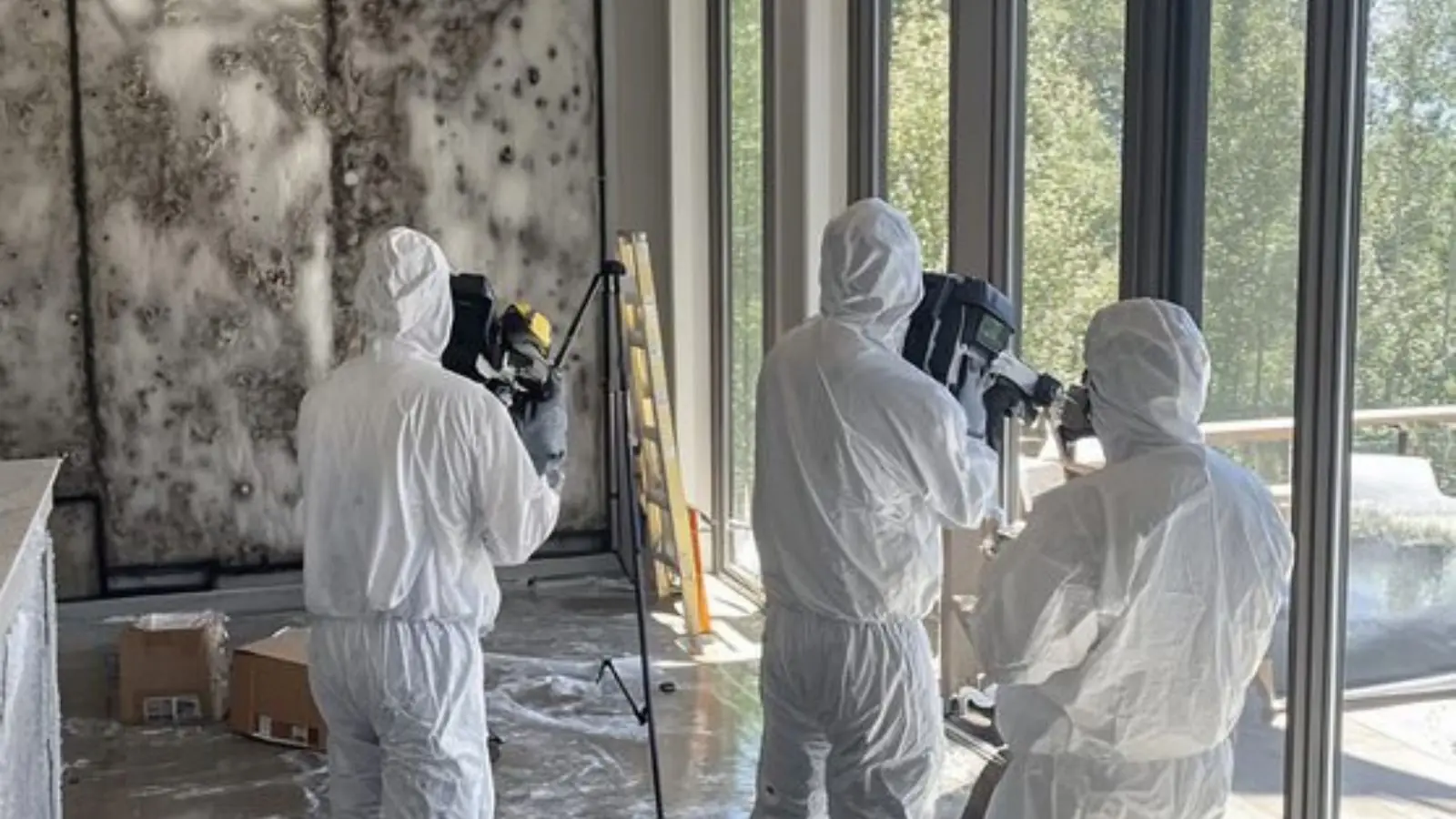
Mold remediation in Port Hueneme, CA addresses mold growth that follows moisture. Mold needs water to grow, so the work begins by finding the source, whether that is a pipe, a roof, a window, an air conditioner condensate line or steady condensation. Cleaning the spot without fixing the moisture only invites it back.
Crews working to ANSI/IICRC S520, the published standard for mold remediation, plan the job around containment, removal and cleaning. A fair question for any contractor is whether the work plan follows S520. Questions about health effects belong to a physician, not to a restoration company, so this page does not make health claims.
Spots in a corner, a musty closet, a stain that keeps returning
Most people notice mold as dark or fuzzy spots in the corner where a wall meets the ceiling in a shower, behind furniture pulled from a wall, or on a closet ceiling under an air conditioning line. A musty smell without visible mold can still point to a damp wall cavity. Color alone does not identify a type of mold.
If you can see a small patch, find the wet source first, then call. If the spot is larger than a few square feet, keeps spreading, or sits in a wall or ceiling you cannot open, call for an inspection. Do not scrub it dry or stir it up with a fan, since that spreads spores.
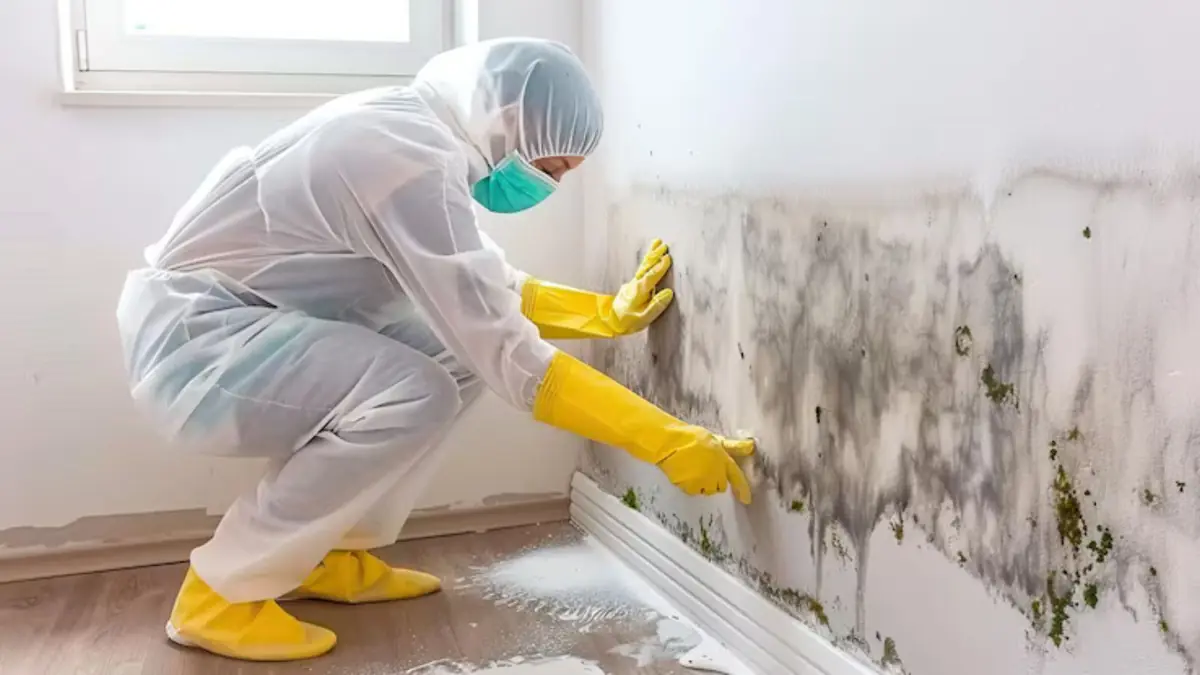
Mold after water damage
Water damage and mold are linked by time. Wet drywall and carpet pad that stay damp for more than a few days are where growth typically begins. That is why fast water mitigation is the best mold prevention, and why a leak found late often needs both drying and remediation.
Port Hueneme's coastal setting adds damp air, especially in bathrooms, closets and enclosed garages without ventilation. Many homes here rely on exhaust fans and open windows rather than basements or crawl spaces, so check bathroom fans, laundry vents and window frames for condensation lines.
| Situation | Typical response | Notes |
|---|---|---|
| Small surface spot on a hard surface | Fix moisture, clean the surface, dry the area | Wear gloves and a mask, and skip bleach on porous materials |
| Spots on drywall, ceiling or baseboard | Cut out affected material, clean nearby framing | Containment and HEPA vacuuming limit spread |
| Smell with no visible mold | Moisture mapping and inspection of the cavity | Opening a small section may be needed |
| Large area or hidden growth | Containment, negative air, removal, cleaning | Independent clearance testing is often added |
Mold removal and black mold cleanup
Remediation crews set up containment with plastic sheeting, run air scrubbers with HEPA filtration, and keep the work area under negative pressure so spores do not drift into the rest of the home. Affected drywall, insulation and carpet are removed and bagged. Surfaces that stay are HEPA vacuumed, damp wiped and dried.
Black mold is a popular search term, but a dark color does not tell you the species. The right response to any dark growth is the same: fix the water, contain, remove and verify. A lab test can name a species, but it does not change the cleanup steps for most homes.
Spots, smell or both?
Call and describe where you see it.
Inspection, testing and clearance
An inspection looks for moisture and visible growth. Testing may collect air or surface samples. Clearance testing happens after remediation, when an independent tester checks that the area is clean enough to rebuild. Ask who does the testing, since many people prefer a tester who is separate from the crew that did the cleanup.
If a lender or buyer has asked for mold clearance during a home sale, ask what documentation they accept before you hire anyone. We cannot promise that a lender will accept any report, but written scope, photos and a clearance report give the best chance.
Mold after an air conditioner condensate overflow or a leak under a bathroom sink is common. Ask whether the closet or cabinet needs to be opened, and keep photos of the wet source from before it was repaired.
What drives the cost of mold remediation
Pricing depends on how far the growth spread and what must be removed. These are the main factors:
Size of the area
More square footage means more containment, labor and disposal.
Materials affected
Drywall and carpet can be removed. Framing is cleaned in place.
Access and location
Attics, crawl spaces and walls take longer to contain and clean.
Testing
Inspection and clearance testing are separate costs.
Moisture repair
Fixing the leak, ventilation or condensation problem is part of the project, but it is often done by a plumber or roofer.
Insurance may cover mold that follows a sudden covered water event, and often does not cover mold from long-term moisture or neglect. Some policies cap mold coverage. Your policy may cap mold coverage, so confirm limits with your insurer before work begins, and ask whether your state licenses mold work.
Want your real number? Call (805) 291-8940
Mold remediation questions in Port Hueneme
Can I just clean mold with bleach?
Bleach can lighten a surface stain, but it does not fix the moisture and it does not reach into porous materials like drywall. Fixing the water source and removing affected material is the lasting approach.
Do I need mold testing before removal?
Not always. Visible growth with a known moisture cause can often be treated directly. Testing helps when growth is hidden, when a lender asks for it, or when you want proof of cleanup.
How long does mold remediation take?
Small jobs can take a day or two. Larger jobs with containment, drying and rebuilding take longer. The crew explains the schedule when the scope is written.
Is mold remediation the same as water damage restoration?
No. Water restoration is about drying and rebuilding, while remediation removes mold. They often overlap, since mold follows damp materials.