
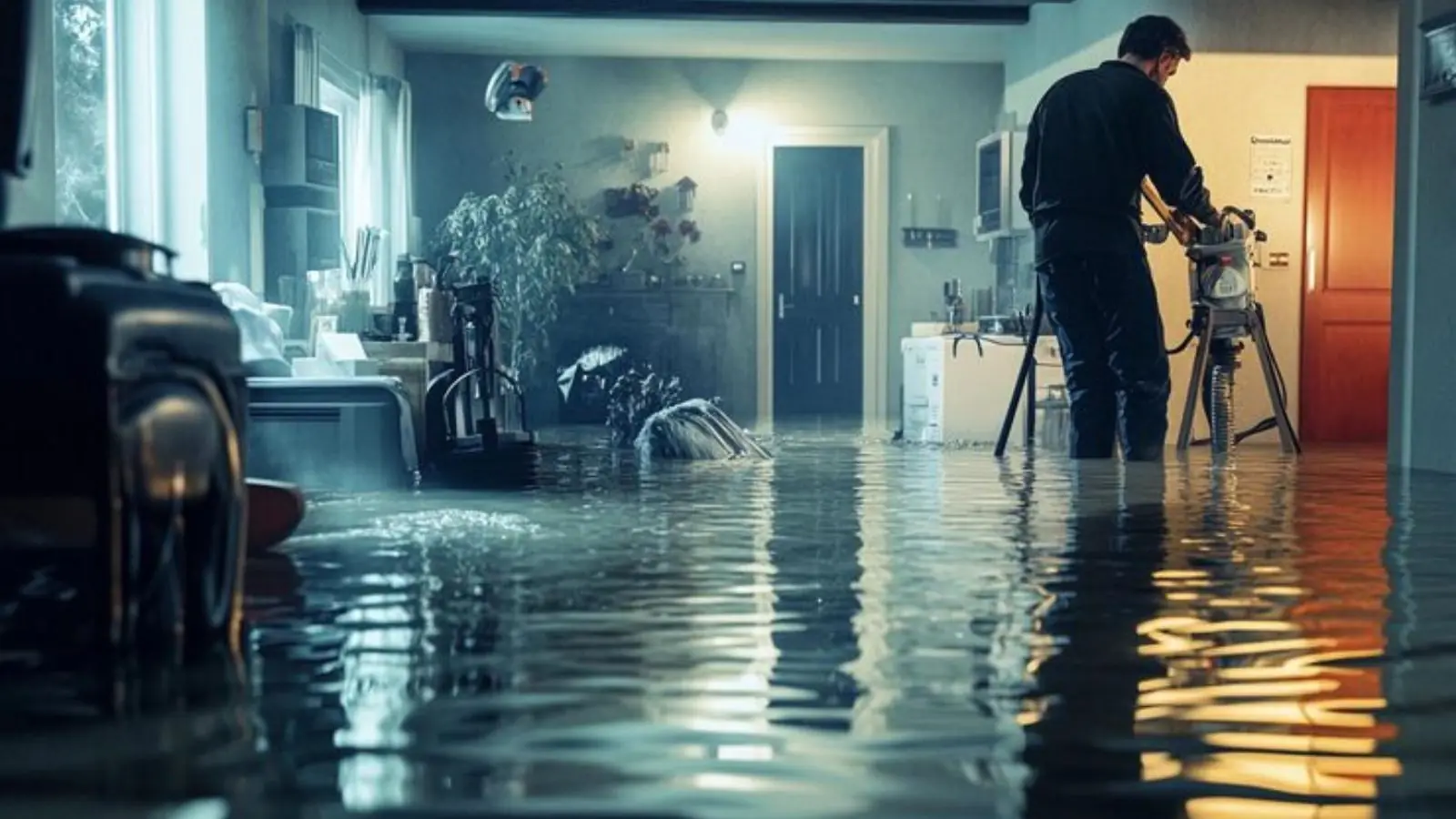
Emergency water mitigation in Port Hueneme, CA means stopping the damage while it is still small. Water that sits in drywall, subfloor and insulation keeps moving, so a leak that looks like one wet corner is often a wet wall cavity as well. Our line is open 24/7, and a crew can start the same day when one is available.
While you wait for the crew, close the main water valve or the fixture shut-off, lift furniture legs off wet carpet, and keep everyone out of rooms with water near outlets. Shut off power to a wet room only if the panel is reachable from dry floor. If you smell gas or see sparks, leave and call 911 before you call us.
When water is still spreading through your home
A supply line that burst overnight in a Port Hueneme condo can soak the unit below by morning. The same goes for a washing machine hose, a water heater failure or a roof leak after a winter storm. In each case, mitigation starts with finding the source and proving it is stopped, because drying equipment is wasted if the leak is still feeding the room.
Once the source is off, the crew removes standing water, then mapped moisture comes next. Meters and a thermal camera show which walls, floors and ceilings are wet behind the paint. That map decides where air movers go, how many dehumidifiers the home needs, and which materials are cheaper to remove than to dry.
Wet walls, damp carpet, musty smell: is this mitigation?
Most people do not search for the trade name. They search for a ceiling stain that keeps growing, a baseboard that feels cool and damp, or carpet that squishes near a wall. Those are the signs that water has moved past the visible spot. Mitigation is the name for the fast response that dries the building before the stain turns into rot or mold.
A musty smell with no visible water usually means moisture inside a wall or under flooring. Our guide to mold remediation covers what happens when drying comes too late. If you can still wipe up the water, the problem is likely small. If the baseboard has swelled or paint is bubbling, call.
How crews dry a Port Hueneme home
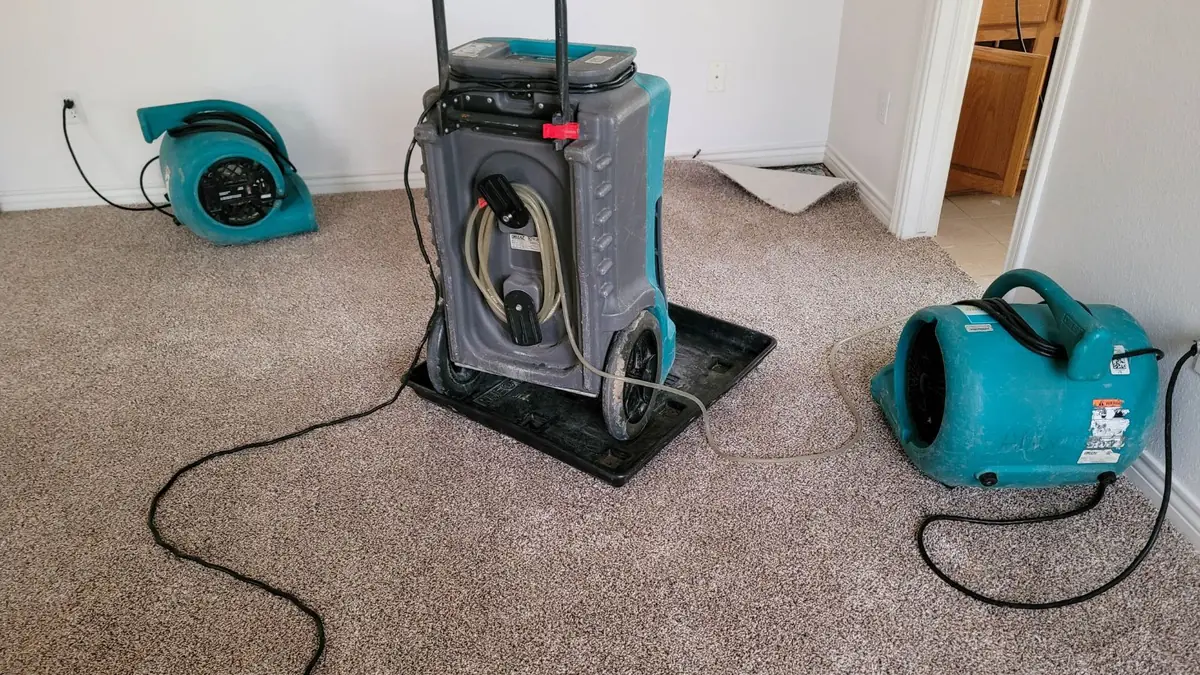
Port Hueneme sits at about 13 feet above sea level, between Oxnard and the Santa Barbara Channel, and marine air can keep indoor humidity high for days. That matters because wet drywall dries slowly when the room air is already damp. Crews pair air movers with low-grain refrigerant (LGR) dehumidifiers so moisture leaves the building instead of just moving around.
- Moisture meters and a thermal camera locate hidden water in walls and ceilings.
- Air movers push dry air across floors and low wall sections.
- LGR or desiccant dehumidifiers pull water vapor out of the air and drain it away.
- Drying logs record readings each visit so you can see when materials reach their dry standard.
- Photos and notes document the loss for your insurance claim.
| Time since the leak | What usually happens | Typical mitigation step |
|---|---|---|
| 0 to 24 hours | Water is still in carpet, pad and wall bases | Extraction, moisture map, equipment set |
| 24 to 72 hours | Drywall, trim and subfloor absorb water | Remove wet pad, open walls if needed, dry in place |
| Day 3 to 5 | Readings fall toward the dry standard | Adjust equipment, check readings, remove it when dry |
| After day 5 with damp readings | Musty odor and surface growth become more likely | Extend drying, then ask about a mold inspection |
Structural drying
Structural drying is the part of mitigation that focuses on the building itself: studs, subfloor, concrete slab and wall cavities. Water trapped in a cavity does not dry fast with air alone, so crews may drill small holes or lift a section of baseboard to push dry air inside. This keeps the wall in place when it can be saved.
A crew following the ANSI/IICRC S500 standard for water damage restoration sets drying goals by material and checks readings against them. Before you hire anyone, ask whether their drying plan follows S500. The answer tells you how drying will be measured, which matters when the work is later submitted to an insurer.
Water in the walls tonight?
Call the 24/7 line and describe what you see.
What changes the cost of mitigation
No honest company can quote mitigation from a photo, because the price depends on how far the water traveled. These are the factors that move the number:
Water category
Clean supply-line water costs less to handle than rainwater or sewage, which need extra protection and disposal.
Area affected
Square footage and the number of rooms set how many air movers and dehumidifiers the job needs.
Materials hit
Carpet pad, drywall and insulation are removed and replaced, while hardwood and subfloor are often dried.
Drying days
Equipment runs until readings reach the dry standard, so slow drying adds days.
Rebuild scope
Mitigation ends when the structure is dry. Repair of walls and floors is separate work.
A burst pipe or failed hose is the kind of event policies tend to cover, while a leak left to drip for months usually is not. Flood from outside sits under separate flood coverage. Read your policy or phone your insurer before you assume anything, and take photos before drying starts.
Want your real number? Call (805) 291-8940
More than half of Port Hueneme households rent, based on 2020 census figures of 52.4 percent renter-occupied. If you rent, tell your landlord about the leak in writing the same day and keep a copy. Then the mitigation record shows when the water was found, which can matter if the repair is disputed. See water damage repair for the rebuild step.
Questions about water mitigation in Port Hueneme
Is water mitigation available after hours and on holidays?
Yes, the line is staffed around the clock, holidays included. When a crew is free, mitigation can begin that same day, and the dispatcher explains which valve or breaker to deal with first.
How long does structural drying take?
Many homes need three to five days, but thick materials, hardwood and slow marine-air days can stretch that. The crew reads moisture levels at each visit and stops only when materials reach the dry goal.
Can I rent air movers and dehumidifiers and do it myself?
You can rent equipment, but the harder part is knowing where water is hiding and when drying is finished. Without a moisture meter, a wall can feel dry while the cavity behind it is still wet.
Does mitigation include the rebuild?
No. Mitigation stops the loss and dries the structure. Replacing drywall, flooring and paint is repair work, and it is scoped and priced separately before it starts.