
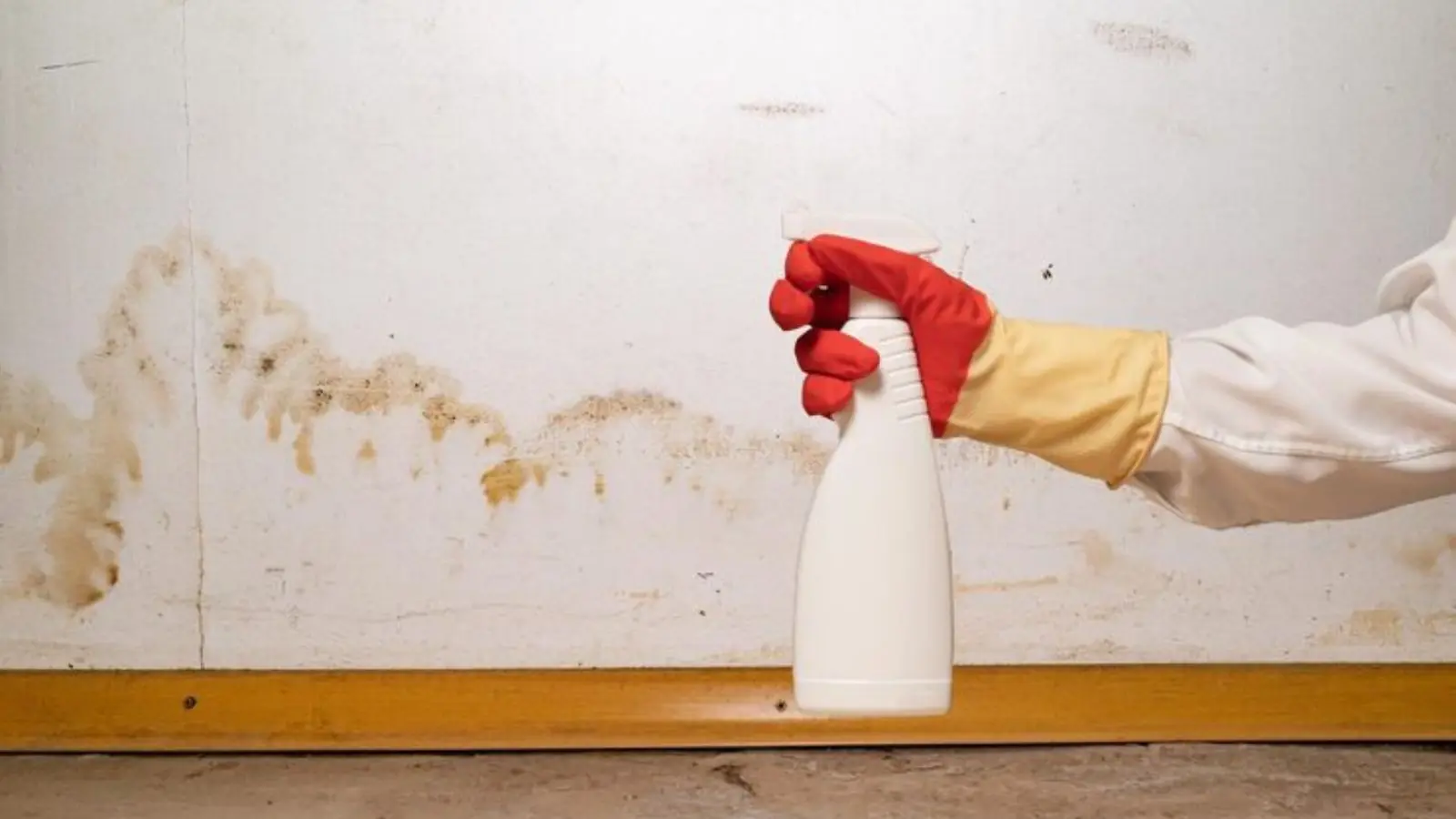
Search for how to kill mold and you will find a dozen household products, each with a loyal fan base. In Port Hueneme, CA the honest answer is shorter. Mold grows when material stays damp, so the lasting fix is to dry the material and fix the water source. Cleaning products only matter after that.
Dead mold still leaves residue, and removal is the goal. Industry guidance such as ANSI/IICRC S520 focuses on removing growth and cleaning, not just on killing it. The approach changes with the surface, so start by identifying what the mold is growing on.
What works on each surface
| Surface | Reasonable approach | Limits |
|---|---|---|
| Sealed tile, glass, fixtures | Detergent and water scrub, rinse, dry | Grout and caulk may need replacing |
| Painted wood and trim | Detergent and water, dry fully | Unpainted or soft wood is harder to clean |
| Concrete and block | Detergent and water with a stiff brush, dry | Moisture often keeps coming back through the wall |
| Drywall and ceiling tile | Usually cut out and replaced | Surface cleaning rarely reaches growth inside |
| Carpet and pad | Usually removed | Cleaning does not reach the backing |
| Insulation | Removed | Cannot be cleaned |
Many owners reach for bleach first. Bleach can lighten color on hard, nonporous surfaces, but it does not soak into porous materials and the water in it can feed growth underneath. Vinegar is sometimes used on small hard-surface areas, but it has the same limits. Never mix bleach with ammonia or other cleaners, since the fumes can be dangerous.
The part that actually stops it coming back
- Fix leaks first, including slow ones under sinks and around tubs.
- Dry wet material within a day or two.
- Keep indoor humidity around 30 to 50 percent.
- Vent bathrooms, laundry rooms and kitchens to the outside.
- Keep furniture a few inches from exterior walls so air can move.
No product can promise that mold will never return, because mold is already in the air as spores. What stops growth is a dry building. If a leak caused the growth, water mitigation gets the structure dry before it spreads.
Mold keeps coming back?
Call and describe where it returns.
When killing is not enough
Growth on drywall, insulation, carpet or in hidden cavities needs removal, containment and often HEPA filtration. If you scrub or spray a large area, spores can move into other rooms. A professional job protects the rest of the house by sealing the work area and keeping air moving into it.
The mold remediation page describes that process. Questions about health effects belong to a physician, and this page does not make health claims.
A simple routine for small hard-surface patches
- Put on gloves, eye protection and a mask rated for fine dust.
- Open a window and keep the area closed from the rest of the home.
- Scrub with detergent and warm water. Do not dry brush.
- Wipe with clean water, then dry with towels and a fan pointed out of the room.
- Bag the rags and recheck the area for moisture over the next week.
If the patch returns within weeks, there is probably a moisture source you have not found yet. Look behind the wall, at the plumbing and at the ventilation.
Why dead mold still needs to go
Even after growth is killed, the remains stay on the surface. Cleaning removes that residue. On porous material, the only way to remove it is to take the material out. That is why guidance for professionals emphasizes physical removal over spraying.
A product label that promises to kill every kind of mold does not tell you what happens to the surface afterward. Read the label for safety instructions, and never combine products.
Protective gear for small cleanups
- Nitrile or rubber gloves that cover the wrists.
- Eye protection with side shields.
- A fitted respirator rated for fine particles.
- Old clothes you can wash right away.
- A bucket and cloths you can throw away afterward.
Humidity targets and tools
A digital hygrometer costs little and tells you whether a room stays above 60 percent for long periods. If it does, a dehumidifier sized for the room helps, and so does moving air with a fan that vents outside. Keep the unit's drain pan or hose clean so it does not become a source of its own.
In bathrooms, run the exhaust fan for at least twenty minutes after a shower. A fan that is noisy but moves no air is not helping, so hold a tissue near the grille to check.
Mold and humidity in Port Hueneme
Port Hueneme is a coastal city at about 13 feet above sea level, with the Santa Barbara Channel to the west and south. Marine air is often damp, so bathrooms, laundry rooms and closed closets are where growth tends to start.
The Port Hueneme Water Agency supplies the city, and a hidden supply line leak can feed a wall for months before it shows. If your water bill rises without explanation, ask a plumber to check for a hidden leak. About 52 percent of households rent, so tell your landlord about recurring mold in writing.
Sources: Naval Base Ventura County water quality report, US Census 2020.
In Camarillo, the AC condensate line is a common cause. In Oxnard, coastal humidity plays a larger role.
Mold cleanup questions in Port Hueneme
Does bleach kill mold?
It can lighten and clean hard, nonporous surfaces. It does not reach into porous materials like drywall, and it does not fix the moisture.
Is vinegar better than bleach?
Neither fixes moisture. Detergent and water on hard surfaces, followed by drying, is a common first step.
Will mold come back after I clean it?
It can, if the area stays damp. Fixing the source and drying the area is the best prevention, but no one can promise it will never return.
Should I use a fogger?
Foggers do not remove growth or fix moisture. Removal and cleaning, with the cause fixed, are what the standard focuses on.