
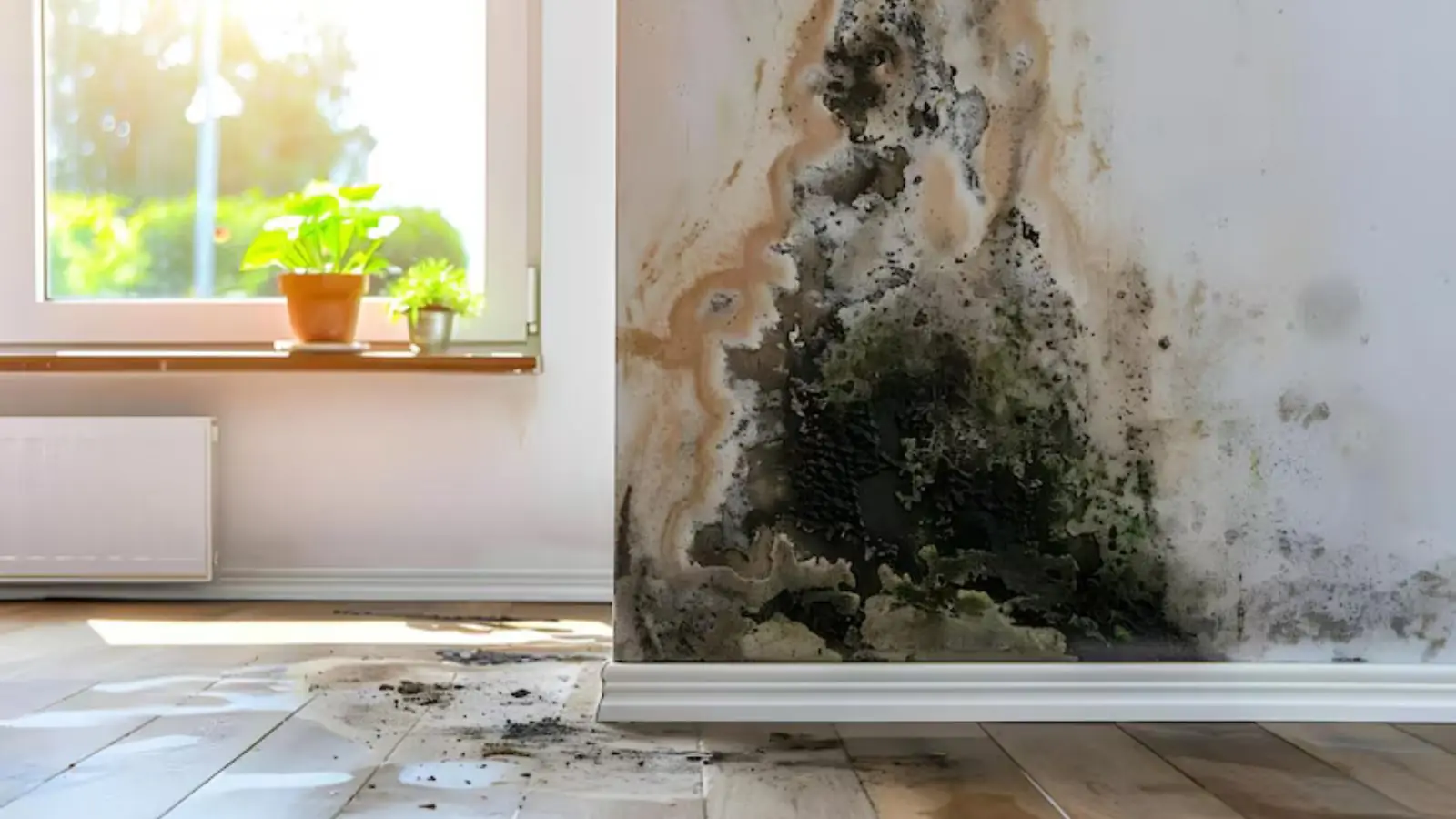
People who search whether mold in a basement is dangerous in Port Hueneme, CA are asking two questions at once: is this a problem for my house, and is it a problem for me? The first is a building question that a restoration company can answer. The second belongs to a physician. This page covers the first and tells you where to take the second.
If anyone in the home has symptoms or a medical condition, talk to a doctor. Do not rely on a website or a contractor for health advice. What you can do now is learn how big the growth is, find the water feeding it, and avoid actions that spread it.
What to look at in your own home
- How large is the affected area, and is it growing?
- Is there active moisture such as a leak, a damp wall or standing water?
- What material is it on: concrete, framing, drywall, carpet or stored items?
- Does the smell stay in one room or move through the home?
- Is the area connected to the heating or cooling system?
A small patch on a hard, sealed surface is a different situation from growth across drywall, insulation or carpet. Porous materials hold growth inside them and generally have to come out. Hard surfaces can usually be cleaned.
Questions for a physician, not a contractor
A doctor is the right person to answer whether symptoms are related to your home, whether you should avoid the area and whether testing is needed. A restoration company can tell you how the cleanup will be contained and how you can avoid disturbing the area. Do not skip medical advice because a website says the mold is harmless or harmful.
Many tenants raise this question in Port Hueneme, where about 52 percent of households rent according to 2020 census counts. If you rent, notify your landlord in writing, keep photos with dates and ask when an inspection can happen. Local tenant resources and the city can explain your rights.
What to do while you decide
| Action | Why | What to avoid |
|---|---|---|
| Fix the leak | Mold needs moisture to grow | Waiting for it to dry on its own |
| Close off the room | Limits spread | Running fans that blow the area into the house |
| Photograph and measure | Gives a record for landlords and insurers | Scrubbing before documenting |
| Dehumidify the area | Brings humidity down | Using humidifiers or leaving wet items in place |
| Call for an assessment | Gets the scope in writing | Painting over it |
Want the mold assessed?
Call and describe the area and any recent water.
How professionals deal with it
A crew following ANSI/IICRC S520 sets up containment, uses HEPA filtration, removes porous material and cleans the surfaces that stay. The air in the work area is kept under negative pressure, so contaminated air does not leak into other rooms. See the mold remediation page for the full process.
Testing is a separate question. Air and surface samples can show what is present, but there is no simple number that says safe or unsafe for every person. That is another reason to ask a physician.
Who to call for what
| Your question | Who can answer it |
|---|---|
| Are symptoms linked to my home? | A physician |
| Where is the moisture coming from? | A plumber, roofer or restoration company with moisture meters |
| How big is the affected area and what must be removed? | A remediation company, in a written scope |
| Is the area clean after the work? | An independent tester, if you want clearance |
| Is my landlord responsible? | A tenant rights group, the city or an attorney |
| Is this covered by my policy? | Your insurer or agent |
Sorting questions this way avoids paying a contractor to answer a medical question or asking a doctor to find a leak. Each person on the list has a different tool.
Keeping a record for a landlord or seller
Write down the date you noticed the problem, the rooms involved and what you did. Add photos with the date visible. Keep copies of messages to your landlord or property manager. If you are selling, tell your agent, since disclosure rules may apply.
Common mistakes while you wait
- Scrubbing dry, which sends spores into the air.
- Running a central fan or air conditioner that spreads air through the home.
- Moving boxes in and out of the affected room.
- Covering the growth with paint or sealer.
- Ignoring the leak while focusing on the growth.
Each of these makes the problem larger or harder to document. Hold off until the area has been looked at and a plan is written down.
Port Hueneme context for low-room mold
Port Hueneme sits at about 13 feet above sea level, surrounded by Oxnard, and storms can fill low areas quickly. The December 21, 2023 storm brought evacuation orders to about 60 houses in a senior community, according to the Associated Press, and low rooms in many places took water.
After flooding, drying quickly matters most. Look at the FEMA flood map for your address and ask the city building department what permits apply to repair work in lower areas.
Sources: Associated Press, US Census 2020, FEMA Flood Map Service Center.
If the growth followed a leak, water mitigation helps by drying what is still wet. Owners in Ventura and Oxnard can use the same checklist.
Questions about mold and safety in Port Hueneme
Can you tell me if mold in my basement will make me sick?
No. That is a medical question for a physician. We can help with the building side: where the moisture is, how big the growth is and how to remove it.
Is black mold always worse than other mold?
Color alone does not tell you the type. Treat any growth as a sign of moisture, and ask a professional to assess it.
Should I stay out of the room?
Limiting time in the room and avoiding disturbing the growth makes sense until it is assessed. Ask your doctor about personal concerns.
Does a landlord have to fix mold in a Port Hueneme rental?
Landlord duties are a legal question. Notify your landlord in writing, keep records and consider asking a tenant rights organization or attorney.