
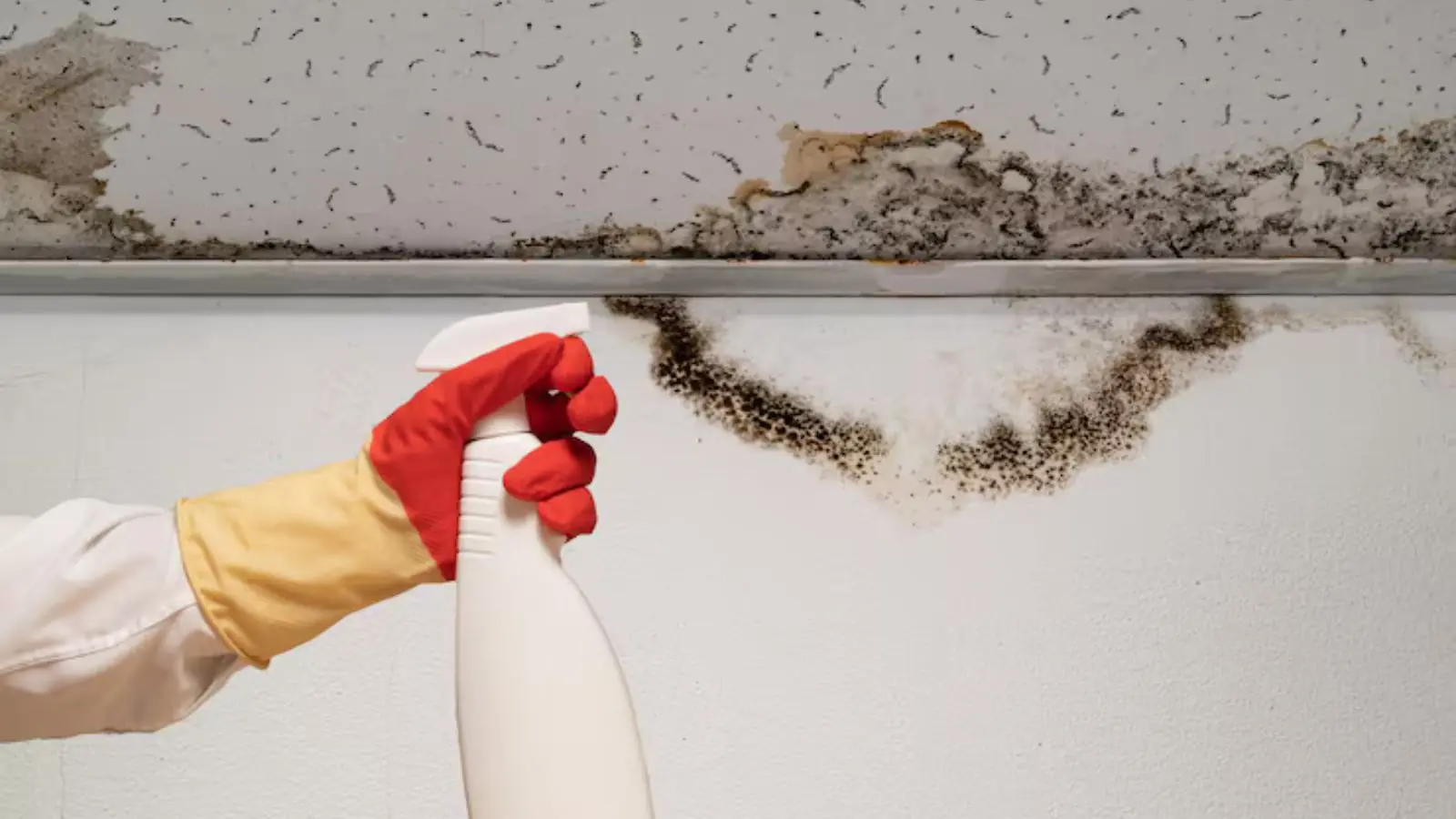
A wet spot on the floor of a closet or a musty smell on the clothes is a common way people in Port Hueneme, CA discover a hidden leak. Closets are enclosed, often on exterior walls, and packed with fabric that absorbs moisture. Growth can start on the back wall or the carpet edge before anything shows on the shelves.
Start by stopping the water. Empty the closet, lift wet items off the floor and look up and behind you for the source. Then document what you find, because insurers and landlords usually ask for photos.
Common leak sources behind a closet
| Source | Clue | Who fixes it |
|---|---|---|
| Air conditioner condensate line or drain pan | Wet floor near the air handler closet | HVAC technician |
| Roof or flashing leak | Stains on the closet ceiling after rain | Roofer |
| Plumbing wall next to the closet | Wet baseboard on the shared wall | Plumber |
| Water heater in a utility closet | Rust, puddles, hissing | Plumber |
| Window or stucco crack on an outside wall | Dark patches on the exterior-facing wall | Contractor |
| Washing machine hose in a laundry closet | Moisture on the floor or drywall | Plumber |
Air conditioner condensate lines clog with algae and overflow into the pan below the unit. When the pan fills, water seeps into floors and walls. This is a very common closet leak and a good reason to schedule an annual HVAC check.
What to remove and what to keep
Clothes, shoes and cardboard boxes that sat in damp conditions often hold odor. Washable items can be laundered, and dry-clean-only items can be taken to a cleaner. Cardboard and particleboard shelving that stayed wet is usually discarded. Photograph items before you throw them out.
Carpet and pad in closets are often removed because they hold water. Drywall that is soft or stained is cut out. A crew dries the cavity with air movers and dehumidifiers through water mitigation and then checks the readings.
Wet closet or musty clothes?
Call and tell dispatch what you found.
When mold has started
If you see fuzzy or dark growth, close the closet and stop moving things in and out. Moving fabric spreads spores into the room. A crew can set up a small containment, remove affected drywall and carpet, and clean the framing. See the mold remediation page for how containment and clearance work.
Keep notes on the date the leak was found and when it was stopped. These help with a claim or a landlord discussion. Do not start sanding or painting until the area is dry and assessed.
Preventing a repeat
- Have the AC condensate line flushed at least once a year.
- Leave a gap between stored items and exterior walls.
- Do not store boxes directly on closet floors.
- Add a small vent or leave the door ajar if the closet is humid.
- Watch for musty smells after cool mornings.
A drying plan for the first week
| Day | What to do | Why |
|---|---|---|
| Day 1 | Stop the source, empty the closet, photograph, extract water | Prevents wicking into walls and carpet |
| Days 2 to 3 | Run air movers and a dehumidifier, remove wet carpet and pad | Dry the closet and nearby walls |
| Days 3 to 5 | Check moisture readings, open soft drywall if needed | Confirm the cavity is drying |
| Day 5 or later | Inspect for odor and growth, plan repairs | Rebuild only after readings are dry |
These timings are typical for clean-water leaks. Thick materials and humid weather can add days. The crew explains the plan after the first moisture reading.
Condensate line care
A homeowner can pour a cup of distilled white vinegar into the condensate line access port to slow algae buildup, if the manufacturer allows it. Ask an HVAC technician to flush the line and test the safety float switch. A float switch shuts the unit off before the pan overflows, and it is worth testing once a year.
Shelves, rods and stored fabric
Wire shelving and metal rods can usually be cleaned and kept. Wood shelves with soft spots or surface growth are replaced. Leather and suede react badly to moisture and are best taken to a specialist soon after the leak, since waiting makes cleaning harder.
Wash fabrics according to their labels, and dry them fully before returning them to the closet. Putting damp clothes back restarts the problem.
Closet moisture in Port Hueneme
Port Hueneme sits at about 13 feet above sea level, with the Santa Barbara Channel on its west and south. Marine air keeps closets on exterior walls humid, especially during cool months.
About 52 percent of Port Hueneme households rent, according to 2020 census data. If a leak starts in an air handler closet, the landlord or HVAC provider usually has to repair it. Send a written report with a photo, and ask for a date.
Sources: US Census 2020.
In Camarillo, where roof and AC leaks are common, closets on upper floors are a frequent victim. In Oxnard condos, check the unit above for leaks.
Closet mold questions in Port Hueneme
How fast can mold grow in a closet?
It can begin within a few days on damp materials, and it grows faster where air does not move. Dry the area quickly.
Can I save my clothes?
Washable items often can be laundered. Items with strong odor or growth may need professional cleaning or replacing.
Is the AC line a landlord problem?
In most rentals the landlord is responsible for the HVAC system. Report it in writing with photos.
Should I replace the closet carpet?
If it was wet for more than a day or two, the pad is usually replaced and the carpet is inspected.