
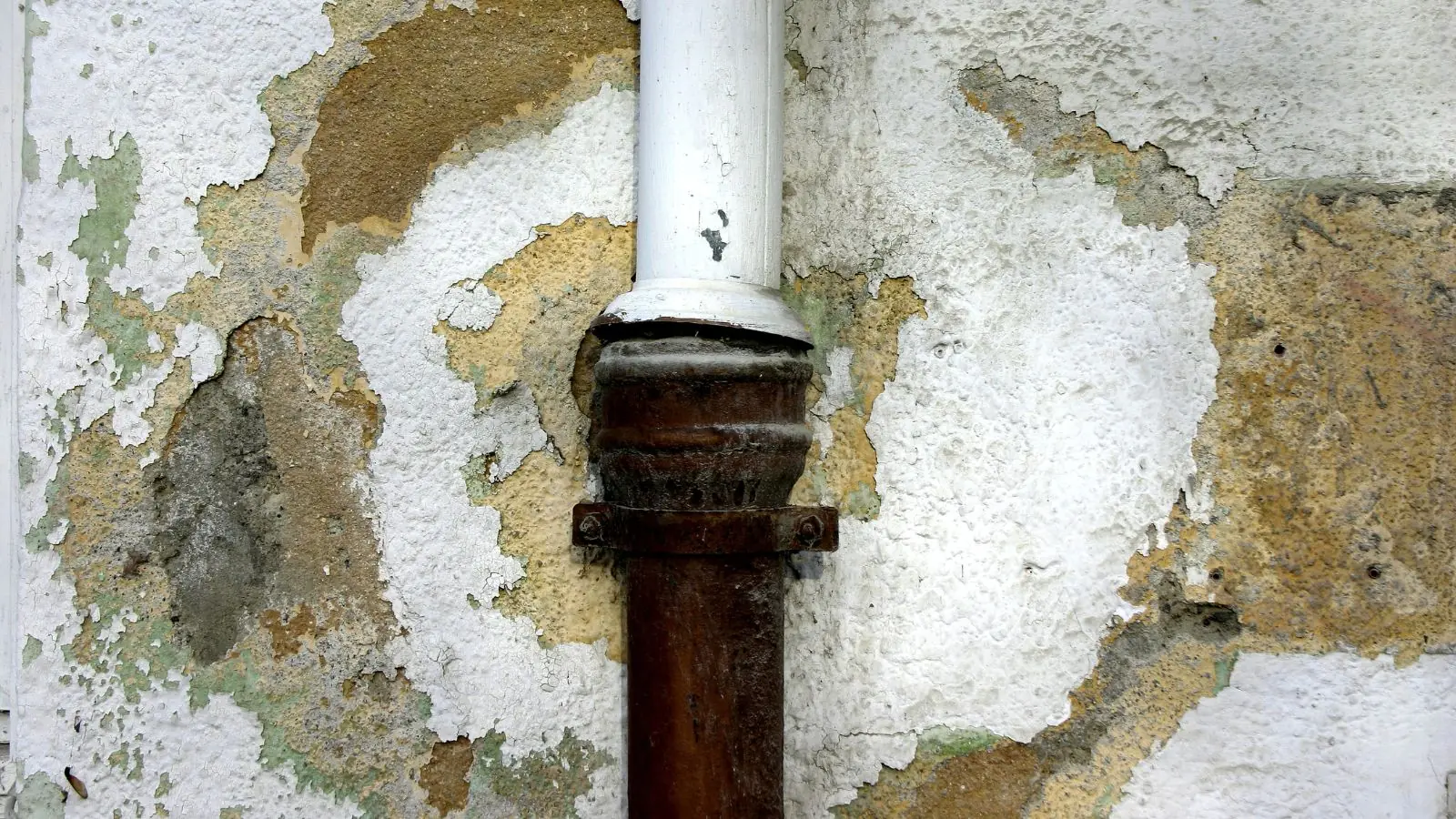
The signs of water damage in walls in Port Hueneme, CA are usually small at first: a faint stain, paint that bubbles, a baseboard that no longer sits flat. Behind the drywall, water can spread across studs and insulation without any drips. By the time a stain is obvious, the cavity may have been wet for days or weeks.
This guide covers what each sign usually means, how to test a wall without cutting into it and when to call. If you find water running or dripping, close the shut-off valve first and call the 24/7 line.
Ten signs to check this week
| Sign | What it often means | First check |
|---|---|---|
| Brown or yellow stain | Water has passed through the drywall | Look above for a bathroom, roof or attic pipe |
| Bubbling or peeling paint | Moisture behind the paint layer | Press gently, since a soft spot means damp drywall |
| Warped or swollen baseboard | Water at the base of the wall | Check the floor next to it for dampness |
| Musty smell with no visible cause | Hidden damp insulation or drywall | Smell near outlets and baseboards |
| Cracked or sagging drywall | Long-term moisture weakening the board | Look for staining nearby |
| Warm or cool wet-feeling spot | A hot water line leaking inside the wall | Compare with the wall nearby |
| Rising water bill | A hidden leak somewhere in the system | Check the meter when all fixtures are off |
| Dark spots or fuzzy growth | Mold on a damp surface | See a mold inspection, not scrubbing |
| Loose or stained wallpaper | Moisture pulling the adhesive | Peel a corner to see the backing |
| Rust on fasteners or electrical boxes | Repeated wetting | Call an electrician before touching it |
One sign alone is not proof. Two or three together suggest a real problem. A stain with a soft spot and a musty smell almost always means wet drywall. The good news is that most of these checks take minutes and cost nothing.
How to test a wall without cutting it
Start with your hands. A wet wall feels cooler than the surrounding wall and slightly soft. Tap along it, because wet drywall sounds dull and dry drywall sounds sharper. A pin-type moisture meter, available at hardware stores, gives a reading you can compare with a known dry spot.
Professionals use meters and thermal cameras that read moisture without making holes. If a wall tests wet, crews usually drill small inspection holes at the base to look inside. Mitigation, described on the water mitigation page, then starts with air movers and dehumidifiers aimed at the cavity.
Wall stain getting bigger?
Call and describe the sign and where it sits.
Where the water usually comes from
- Bathroom and kitchen supply lines and drains.
- Washing machine hoses and hot water heaters in closets or garages.
- Roof flashing, skylights and window frames in winter rain.
- Condensation lines from air conditioners and furnaces.
- Exterior stucco cracks that let rain into the wall.
Each source needs a different fix. A plumber handles pipes, a roofer fixes flashing and a stucco contractor seals cracks. Restoration crews then dry the wall and repair the finish. If the source is unknown, a moisture map traces the pattern back to it.
What a repaired wall looks like
A wall that dried in place only needs priming and painting. Drywall that is swollen or crumbling is cut out in a clean rectangle, a few inches past the wet line. New board is taped, textured and painted. The water damage repair page shows how these steps are scoped in writing.
Insulation in a wet wall is usually removed, because it holds water against the studs. Studs themselves are dried with equipment. If they stay soft after drying, they need to be replaced.
When a wall sign is an emergency
Call right away if a wall feels warm and damp, if you hear water running with all fixtures off, if drywall bulges or if water is near outlets. Those signs point to an active leak, and active leaks are the only kind that get worse by the hour. Close the main water valve and call the 24/7 line while you wait for a plumber.
Recording what you find
Mark the edge of a stain with a pencil and write the date next to it. Check again in two days. A stain that grows is still active, and one that stays the same may be an old leak. Either way, take photos from the same spot each time so the comparison is fair.
Wall moisture and Port Hueneme homes
Port Hueneme is a coastal city of about 22,000 people sitting at roughly 13 feet above sea level. About 52 percent of households rent, so tenants often spot wall stains first. Report them in writing to your landlord with a photo and date.
Stucco exteriors and winter storms make wall leaks easy to miss. On December 21, 2023, the National Weather Service recorded 3.18 inches of rain in downtown Oxnard in one hour, according to the Associated Press. After a storm like that, check ceilings and walls for new stains within a day or two.
Sources: US Census 2020, Associated Press.
If the stain is in a bedroom in Oxnard or in a closet in Camarillo, the same checks apply. Look first for the nearest water source above the stain.
Wall damage questions in Port Hueneme
Can a wall be wet without a stain?
Yes. Water inside a cavity can run for days with no stain. A moisture meter or thermal camera finds it. A musty smell is often the earliest sign.
How long can drywall stay wet before it needs replacing?
It depends on the water. Clean water for a short time can dry in place. Wet drywall that stays damp for more than a few days is at risk of growth and often replaced.
Do stucco homes in Port Hueneme hide wall leaks?
They can. Water can enter through cracks and run behind the stucco to the interior wall. Look for stains near windows and the base of exterior walls after rain.
Should I open the wall myself?
Small inspection holes are fine, but cutting near wiring or plumbing is risky. If you smell mold or see growth, leave the wall alone and call.