
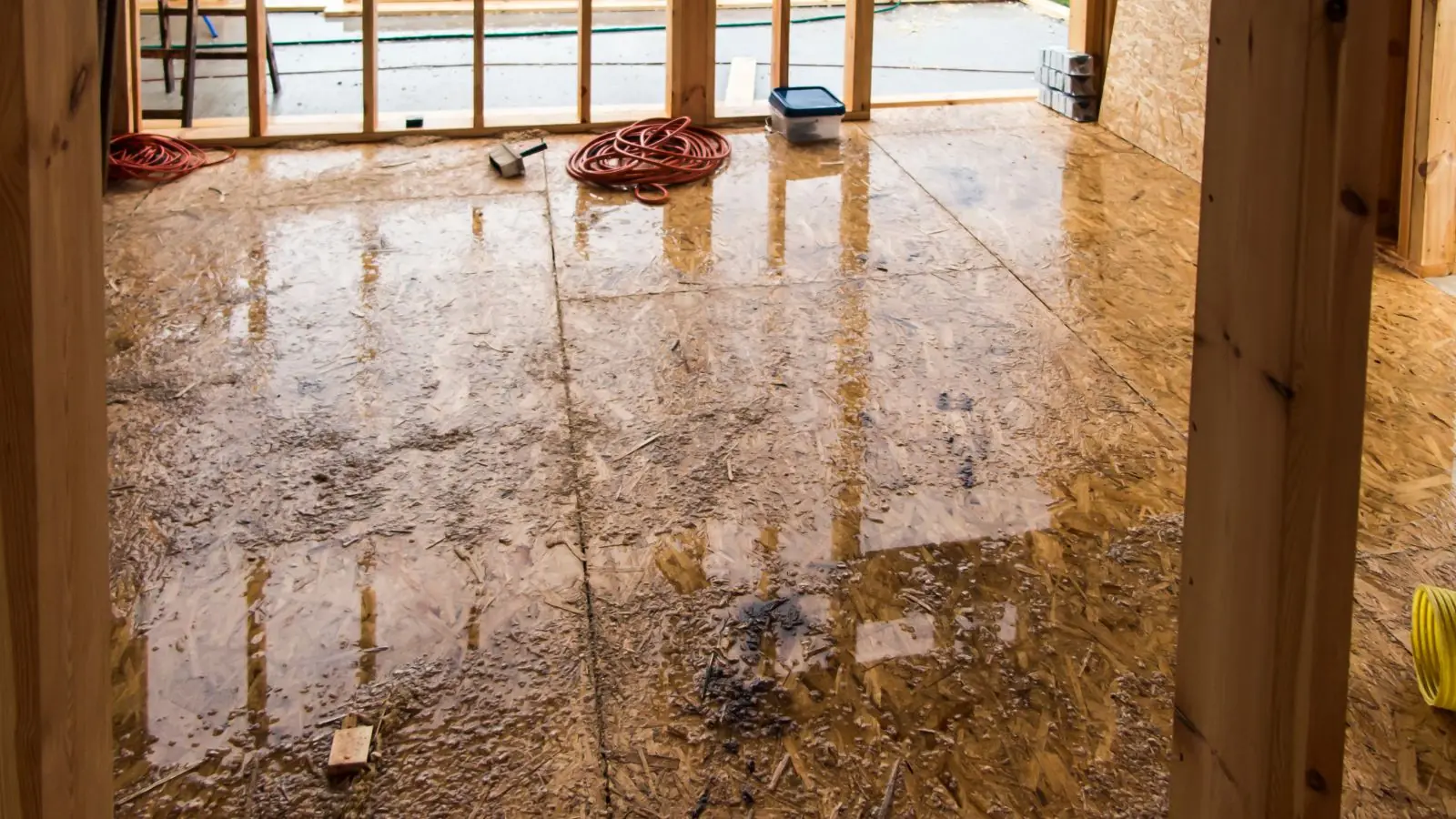
A water damaged floor in Port Hueneme, CA needs fast action, but the right action depends on the flooring. Carpet and pad act like sponges. Tile resists water but its grout and subfloor do not. Vinyl plank and laminate can trap water underneath, and hardwood can swell and cup. Start by removing the source and pulling off anything that holds water against the floor.
Before cleaning, photograph the floor and any marks on walls. Then remove rugs, wet boxes and furniture legs that sit on damp flooring. Open windows if the weather is dry and run fans to move air.
What each floor type can survive
| Floor type | After clean water | After contaminated water |
|---|---|---|
| Wall-to-wall carpet | Often saved if extracted fast, pad usually replaced | Carpet and pad removed |
| Ceramic or porcelain tile | Usually fine, grout cleaned and dried | Clean and disinfect, check subfloor |
| Vinyl plank | Planks lifted to dry the subfloor, sometimes reused | Replace and clean the subfloor |
| Laminate | Often replaced, swells at seams | Replace |
| Solid hardwood | Dry slowly, then refinish if possible | Often replaced |
| Concrete slab | Dries out, but check for moisture beneath finishes | Clean and disinfect |
Contaminated water changes everything. If the water came from a sewage backup, a storm drain or rising ground water, porous materials are discarded and hard surfaces are disinfected. See flood damage restoration for the steps.
Testing a floor for hidden moisture
A floor can look dry and still hold water underneath. A moisture meter gives a number, and you can compare it to a dry area. For slab floors, a simple test is to tape a one-foot square of clear plastic to the surface for a day or two. Condensation under the plastic means the slab is releasing moisture.
Subfloor under vinyl and laminate can stay wet for weeks. If baseboards have swelled or seams are lifting, plan on professional drying through water mitigation. Without it, mold and odor often follow.
Floor soaked?
Call the 24/7 line to plan extraction and drying.
Steps to take in the first day
- Stop the source and shut off power to wet areas only if it is safe.
- Extract standing water with a wet vacuum or call for pumps.
- Pull up wet area rugs and lift furniture onto blocks.
- Pull back carpet at a corner to see if the pad is wet.
- Run fans and a dehumidifier in the room and keep doors open for air flow.
Do not use a household vacuum on standing water, and do not use heat guns or space heaters on wet flooring. Heat can warp planks and speeds up cracking.
Deciding on repair or replacement
Replacement is the answer when materials are contaminated, delaminated or moldy. Drying is the answer when materials are solid and caught early. A written scope lists each room, the flooring type and the method, so you can compare it with any other quote. See water damage repair.
If you are replacing a floor, ask about subfloor moisture before the new flooring goes down. Installing over damp subfloor is a common reason for problems a few months later.
Tile, grout and slab homes
Tile resists water, but the thinset, backer board and subfloor underneath do not always. When water gets under tile, you may see loose tiles, hollow sounds when tapped or grout that darkens. A crew can drill small holes to test and dry the layers below before deciding whether to lift the tile.
Concrete slabs hold moisture and release it slowly, so flooring installed over a slab that is not dry can fail later. Wait for moisture tests before laying new floors.
If you plan to keep the carpet
Carpet can often be saved if the water was clean and extraction started fast. The crew lifts a corner, removes the pad and dries the carpet and slab with air movers. After that, the carpet is cleaned and reinstalled on new pad. Keeping it makes sense only when it is in good shape and the water was not contaminated.
Furniture, blocks and airflow
Put aluminum foil or plastic under furniture legs on wet carpet to stop stains from transferring. Lift heavy pieces onto blocks so air reaches the floor beneath them. Open interior doors, closets and cabinets to let air move through the room.
Avoid covering a wet floor with towels for days. Towels hold moisture against the floor. Swap them out frequently, or remove them once the standing water is gone.
Floors and moisture in Port Hueneme
Port Hueneme homes sit close to the Santa Barbara Channel at roughly 13 feet above sea level. Concrete slabs are common in coastal Southern California, so a slab leak or a burst supply line often wets the floor from above rather than below. Check your own home for slab versus raised floor before deciding on drying methods.
If you rent, which is true for about 52 percent of Port Hueneme households, ask the landlord who handles flooring. If you own, check your policy for limits on flooring and matching.
Sources: US Census 2020.
In Oxnard, beach-area homes face the same marine air, and in Ventura, older hillside homes may have raised wood floors with crawl spaces.
Floor questions in Port Hueneme
Can I save wet carpet?
If the water was clean and the carpet was extracted within a day or two, it can often be saved. The pad is usually replaced.
Is it safe to walk on a wet floor?
Water and electricity do not mix. Keep away from outlets and power strips, and wear shoes if there is broken material.
How long does a floor take to dry?
Carpet may take a few days. Hardwood and subfloor can take longer, and slow marine air can add time.
Should I replace flooring before the insurance adjuster comes?
Take photos first, call your insurer, and ask before you discard anything. Keep samples if asked.